


The 7 Key Questions Intercom Customers Care About (Part 7): How to Optimize Support Costs with AI
In the process of assisting enterprises with Intercom deployment, we actively gather and summarize user feedback. Among them, one frequently asked question from clients is: How does AI help optimize support costs, and how can human-AI collaboration be achieved?
Before introducing AI chatbots, customer service teams often struggled with challenges such as high labor costs, slow response times, and the inability to provide 24/7 service. During peak hours, manpower was insufficient; during off-peak hours, resources were wasted. Manual handling of repetitive inquiries led to inefficiency and poor user experience. These issues created an urgent need for smarter solutions.
This article will explore in depth how Intercom reduces the workload of human agents through intelligent routing features, helping businesses enhance service quality and operational efficiency.
Customer Pain Points
For example, in the information services industry, support teams often face fluctuating workloads and repetitive, inefficient customer inquiries. On one hand, seasonal traffic spikes lead to imbalanced staffing — during product launches or promotional campaigns, inquiry volume can surge dramatically, requiring 3–5 times more manpower. However, during normal periods, many agents remain idle. This “busy during peaks, idle during lows” situation results in more than 30% higher annual labor costs.
On the other hand, inefficient inquiry handling slows down overall performance — support agents spend about 60% of their time on repetitive issues such as password resets or billing questions, causing delays in responding to high-value technical inquiries. As a result, average handling times exceed industry standards by 40%, and customer satisfaction continues to decline.
These problems not only increase operational costs but also limit the flexibility and responsiveness of support teams. To address these pain points, businesses need a more agile and efficient customer service solution.
Say Goodbye to Support Challenges — Intercom Helps Optimize Costs
To help businesses optimize costs, Intercom provides a flexible “pay-per-seat” model, combined with intelligent routing features (such as AI bots and automated replies) to reduce manual workload, lower labor costs, and improve resource utilization.
1. Pay-per-seat model
Intercom adopts a flexible pricing model where businesses can configure accounts for N support agents as needed. This prevents resource waste and allows easy scaling based on team size and demand.
2. Intelligent routing + AI bots to reduce costs
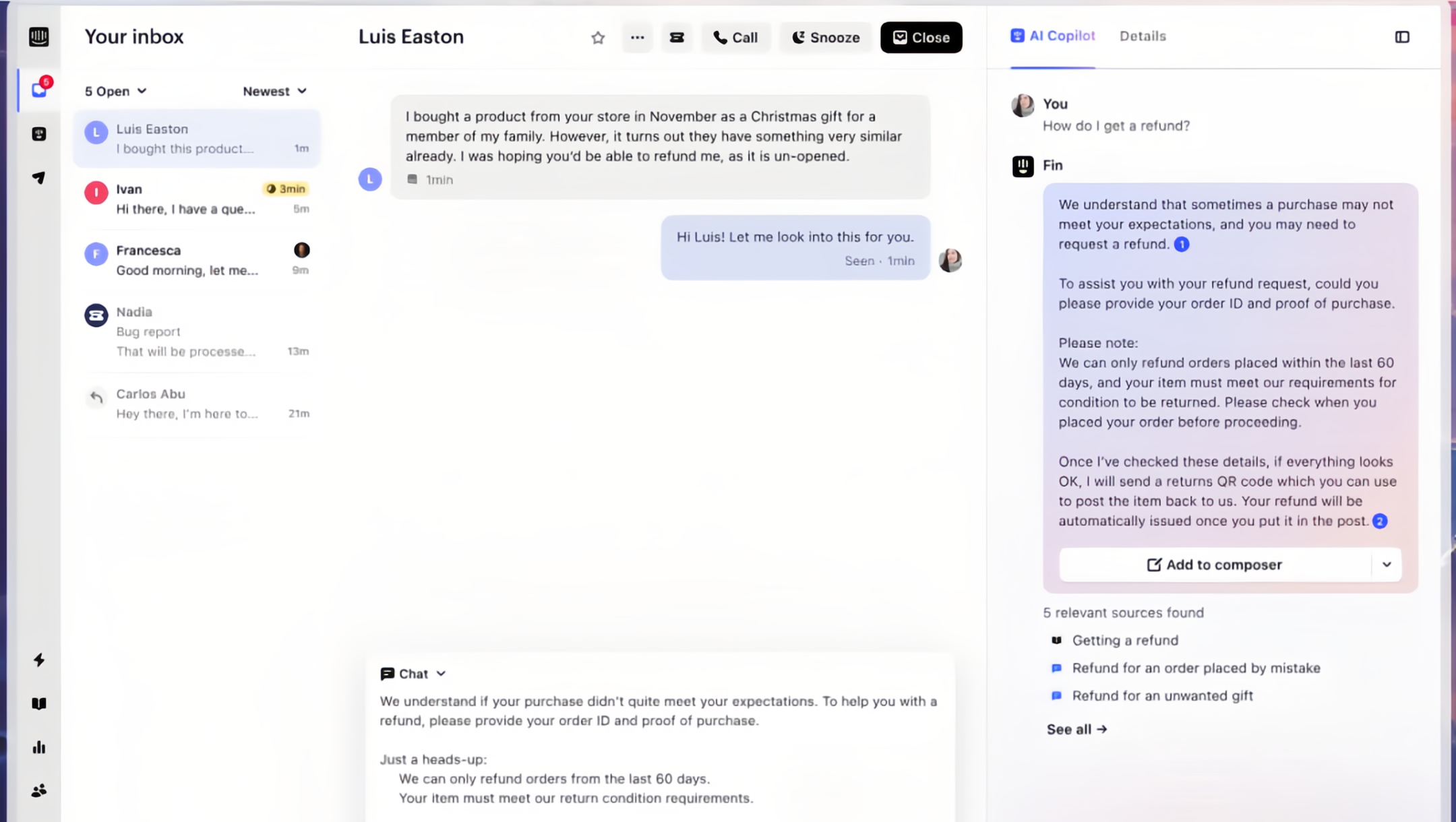
- AI bots + human agent collaboration: AI bots handle common inquiries, while complex issues are escalated to human agents. This significantly reduces manual workload, boosts efficiency, and lowers costs.
- Automation during low-traffic periods: During quieter hours, AI bots or automated replies take over, minimizing human intervention and further optimizing resource allocation.
Empowered by Artificial Intelligence — Intercom Ushers in a New Era of Customer Service
As a global innovation solution provider, YouRead has long been dedicated to supporting enterprises in their global expansion journey. Through collaboration with Intercom, we deliver flexible and efficient customer service management solutions. Leveraging Intercom’s flexible pay-per-seat model and intelligent routing with AI bots, businesses can dynamically allocate resources, efficiently handle repetitive inquiries, and significantly reduce labor costs while easing the burden on human agents.
From smart traffic adjustments during peaks and troughs to precise handling of massive inquiries, Intercom empowers enterprises with innovative features to achieve refined cost management without compromising service quality.